

Karin Larsson and the Courage to Choose Colour
What can we learn from an astonishing artist.
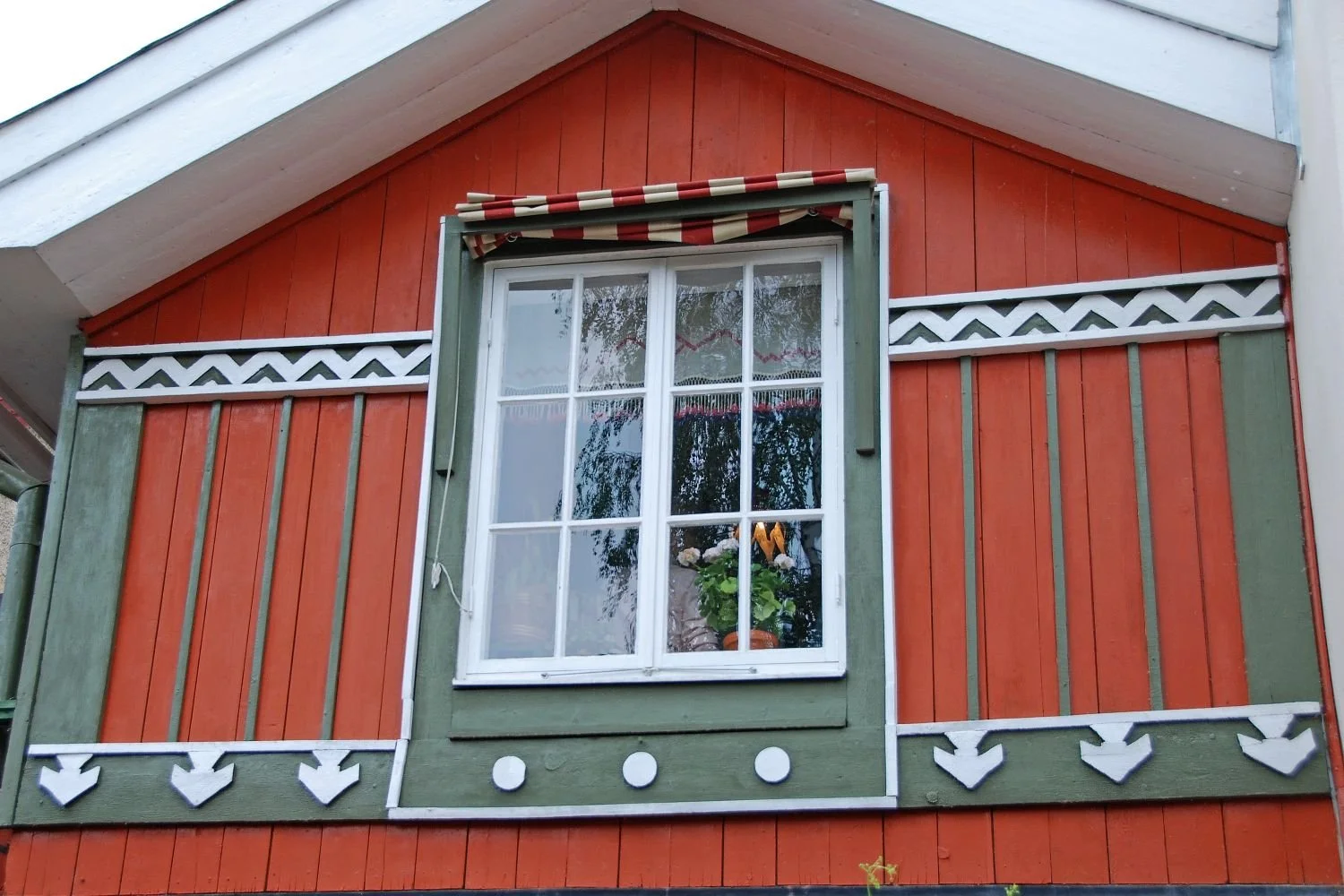
Front of Karin and Carl Larsson’s house.
Sweden does not seem particularly afraid of colour.
Against miles of dark green forest, houses are painted red. Window frames turn yellow, doors blue or green, and even on a grey day the colours hold their ground.
My own work is mostly drawn to the landscapes of Great Britain – hedgerows, old cottages, country lanes, wind and changing light. But Sweden has become a second landscape for me, particularly its forests and lakes.
I came here for a holiday, maybe to do some painting along the way. What I did not expect was to spend quite so much time thinking about another artist.
Karin Larsson.
Most people who know the Larsson name know the paintings of her husband, Carl. His watercolours of their family home, Lilla Hyttnäs, became famous far beyond Sweden: children reading and playing, flowers on windowsills, painted furniture, patterned textiles and rooms full of colour and light. They helped create an image of Swedish family life that is still instantly recognisable.
I visited Lilla Hyttnäs a few years ago, and it stayed with me. It was colourful, personal and unlike anywhere else I had seen.
The colours. The textiles. The furniture. The unexpected combinations.
Many of them were Karin's decisions.
The longer I think about it, the more fascinating I find her story.
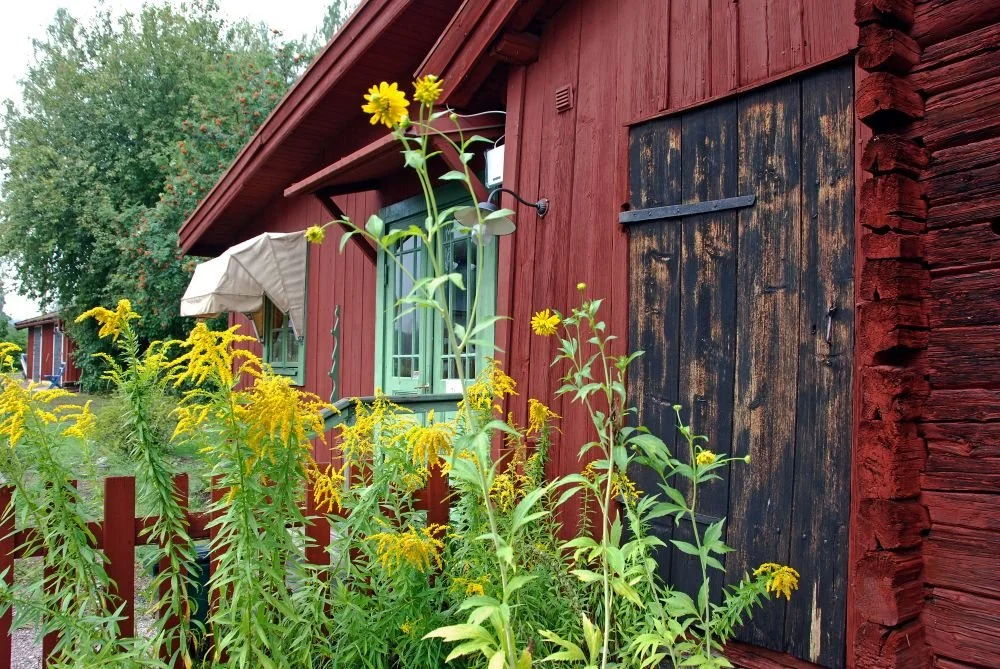
Even the farm buildings are little works of art.
The woman beyond the frame
Karin Bergöö had studied at the Royal Swedish Academy of Fine Arts and later in Paris. When she met Carl, they came together as two painters.
However, after they married, Karin lived within the expectations placed on women in the late nineteenth century. She had eight children. Whatever combination of choice, circumstance and necessity lay behind it, she did not go on to build the sort of public career as a painter that Carl did. And this despite being every bit as talented as Carl.
But her creativity did not disappear.
It changed direction.
She designed textiles and furniture. She wove and embroidered. She made clothes. She worked with craftsmen. She shaped the garden and, importantly, she determined much of the colour within Lilla Hyttnäs.
Her art had moved beyond the conventional canvas.
When art is more than a canvas
I paint, but painting has never felt entirely separate from the other things I make.
I sew. I design quilts and patterns. I crochet. I potter. I print and cut paper. I make flower arrangements. I design with plants in my garden (with more or less success). I rearrange things in the house because a proportion or colour feels wrong, and then, occasionally, put everything back where it started.
These are different disciplines.
A painting is not a quilt. A quilt is not a garden.
But the eye travels between them.
A quilt can sharpen your understanding of colour relationships. A garden can make you think differently about rhythm and composition. A pattern may later turn up in a painting.
Creative lives do not always respect category headings.
Karin's certainly didn't.
Her conventional painting career became smaller, but her artistic world became remarkably broad. Textiles, clothes, furniture, colour and the house itself became places for the same visual intelligence to operate.
That feels important, particularly when looking back at forms of creativity traditionally associated with women.
For a long time, the distinction between fine art and work made within the home helped decide which creative work was taken seriously.
Painting belonged to art.
Textiles, sewing and much of domestic design were more easily dismissed as craft, decoration or simply part of running a household.
But colour remains colour.
Composition remains composition.
Rhythm, proportion, form and judgement do not stop being artistic because the material happens to be wool rather than oil paint.
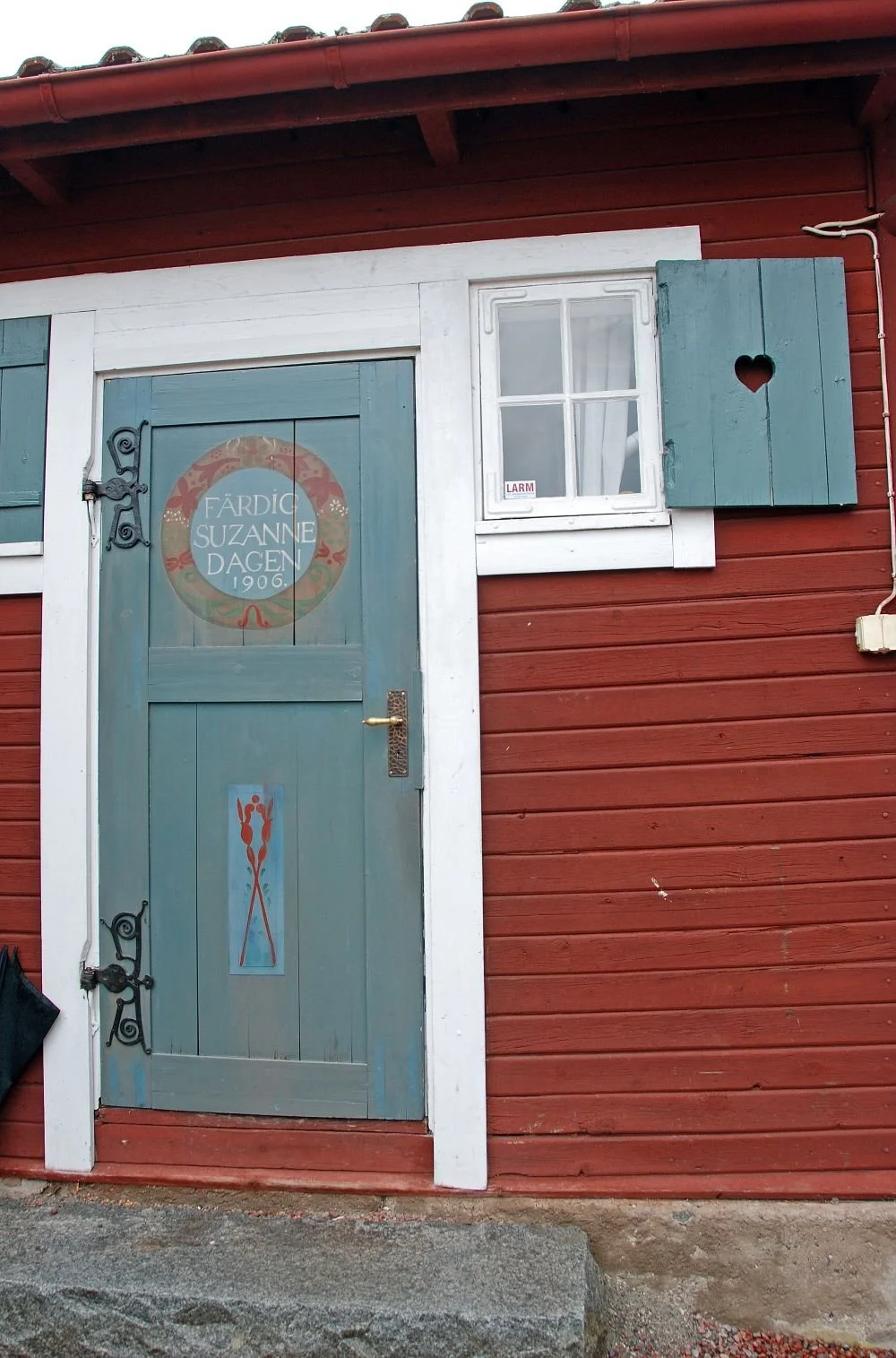
Colour everywhere…
A home as an ever-changing work of art
I have never been interested in the idea of a perfectly designed home or garden. The places I like best tend to have something unruly about them. I like it when a home has character, when you can see that it has grown over the years.
Karin's home is exactly that and more.
Lilla Hyttnäs wasn't simply decorated according to the respectable rules of the day. Instead of the heavy, dark bourgeois interiors of the period, Karin used strong colours, mixed influences and altered furniture. Her clothing rejected some of the restrictions of conventional women's fashion. She designed practical clothes and objects because she wanted them to work for the lives being lived there.
It is a home being actively made.
Also on the blog:
Why Eclectic Cottage Style Takes the Pressure Off.
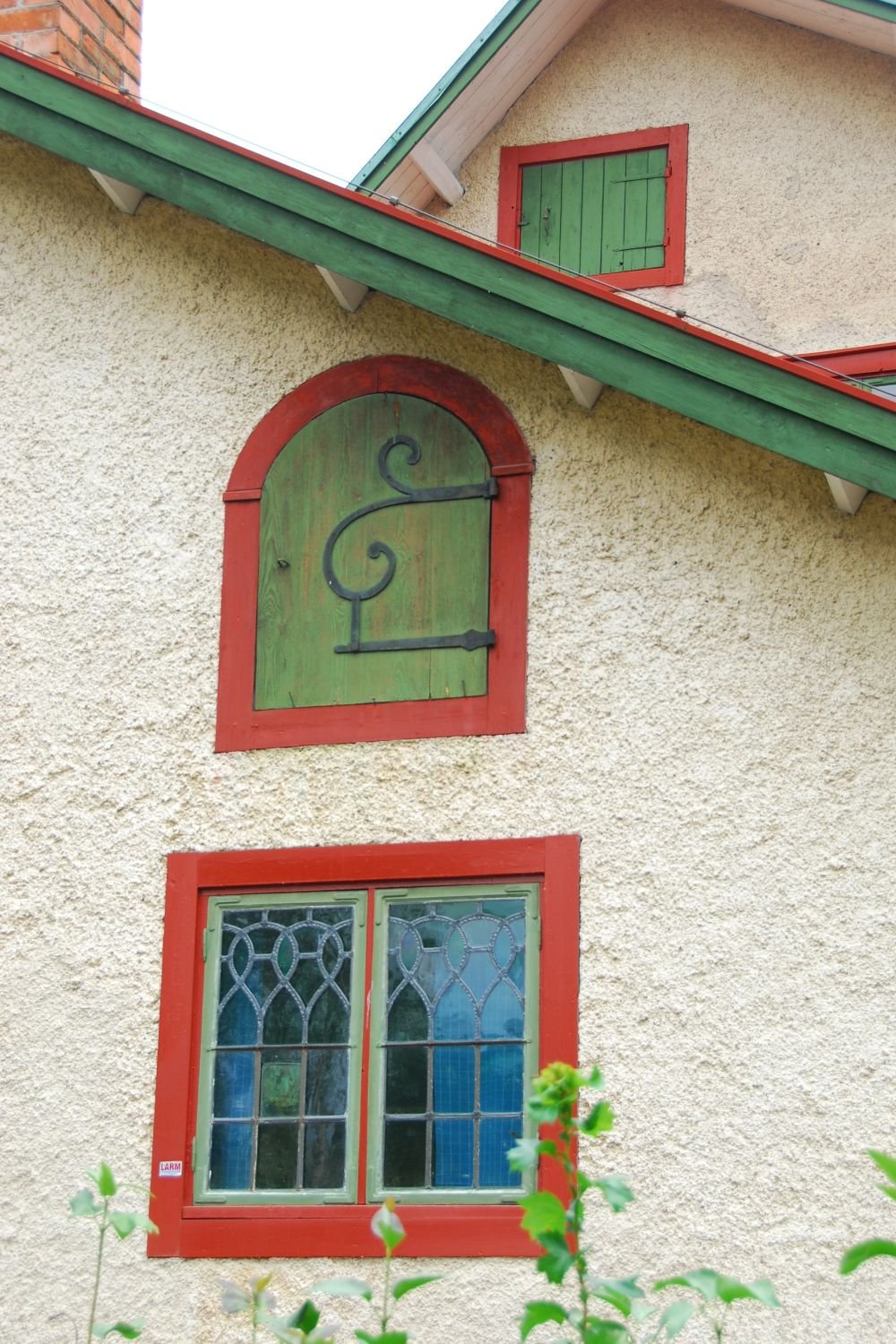
Every angle of the house shows beautiful details.
The courage to choose colour
The colours at Lilla Hyttnäs were clear, with strong contrasts: Green could sit beside red Painted furniture, textiles with bold geometric forms. Karin combined Swedish craft traditions with international influences.
She made choices and allowed those choices to remain visible.
There is courage in that. Colour, after all, is a commitment.
You can consider a colour for as long as you like, hold samples beside one another, move them into better light and develop increasingly persuasive reasons for doing absolutely nothing.
As a painter, I know that moment well.
Making decisions about colour, composition and what stays or goes can be daunting. She committed to an idea rather than diluting it into something more generally acceptable.
If something needed colour, she gave it colour.
In German there is an expression, Farbe bekennen – to show your colours. It means to take a position and make it clear where you stand.
Karin seems to have done rather a lot of that, quite literally.
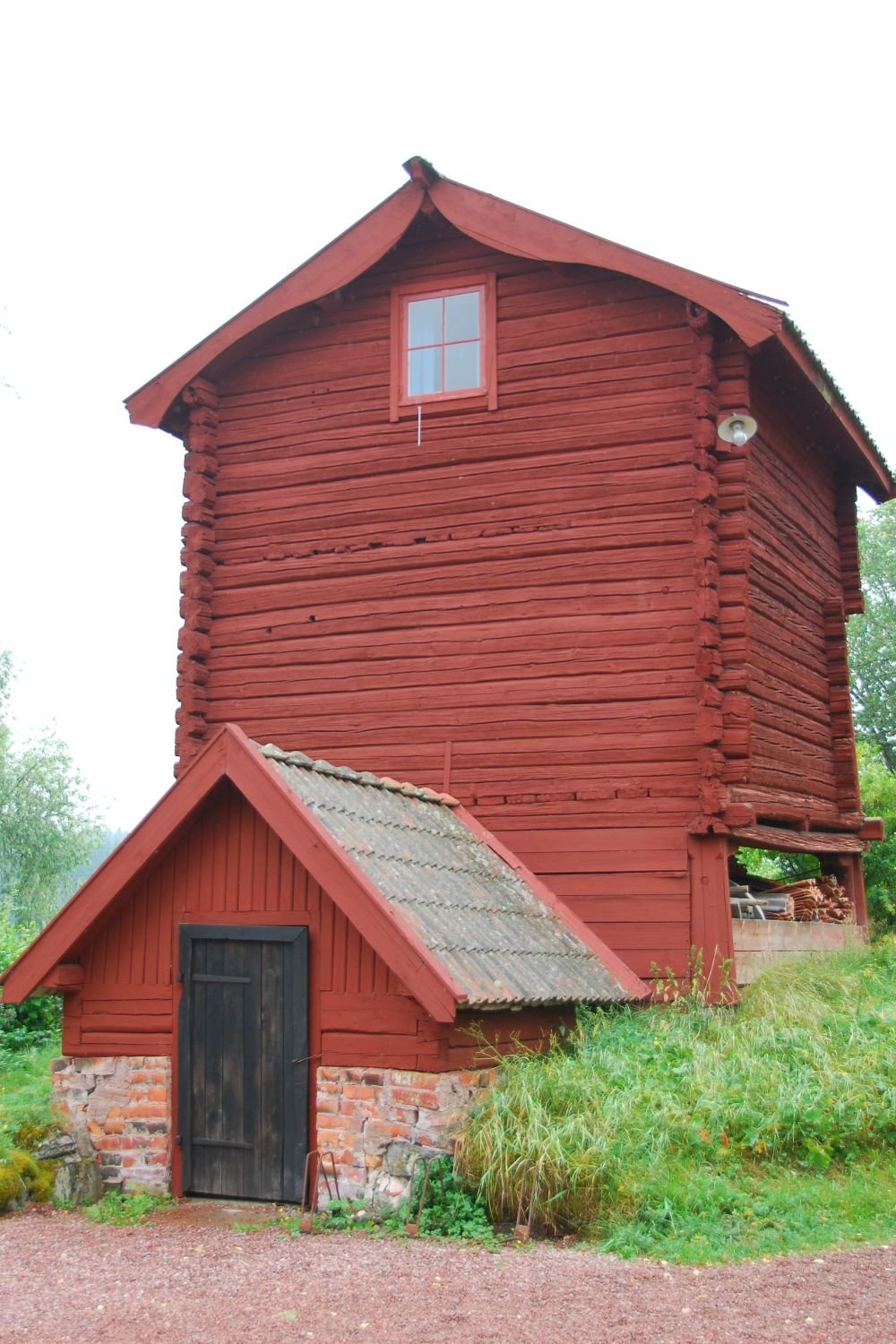
Another outbuilding.
Let the hand be seen
When one of the weavers working in the house made a mistake, Karin is said to have told her to continue: the hand should be visible.
I like that enormously.
Not because craftsmanship doesn't matter. It does. And not because every mistake becomes charming the moment somebody calls it handmade. Sometimes a wonky seam is simply a wonky seam.
But there is a difference between craftsmanship and erasing every trace of the person who made something.
A brushstroke does not always need smoothing away. A line does not necessarily improve because it has been corrected for the fifth time. A handmade object need not pretend that a machine produced it.
The hand can remain.
That same idea runs through much of what attracts me visually:
I like homes that reveal something about the people living in them: books, paintings, repaired things, inherited things, a chair claimed permanently by the dog despite all previous agreements.
Not because imperfection is automatically beautiful.
Because evidence of life is interesting.
A personal style is made of decisions
Karin’s style feels personal without appearing to have been invented as a style.
Today we may be tempted to define ourselves before we have finished making anything. Choose a niche. Establish a palette. Make everything recognisable. Preferably by Tuesday.
But personal style develops in almost the opposite way.
You keep making choices.
Certain colours return.
So do certain shapes, subjects and materials.
You notice which things continue to interest you when fashions have moved elsewhere.
For me, those things include old houses, antiques, hedgerows, animals, weather, gardens that have kept something wild, strong colour, pattern, natural materials and the marks left by hand.
I did not select them from a list in order to construct an artistic identity. They kept turning up.
Eventually, the choices begin to recognise one another.
Karin drew from Swedish folk traditions, contemporary ideas and influences from elsewhere, but the result was not simply a catalogue of references.
She made them hers.
That takes more than taste.
It takes judgement – and sufficient confidence not to remove yourself from the work.
Not quite the Swedish idyll
It is easy to look at Carl Larsson's paintings and imagine a household untouched by anything particularly difficult.
There are flowers, children, bright rooms, meals outside and all the ingredients of what we might now call an idyll.
But this was a real family.
Karin gave birth to eight children. Their son Mats died when he was only two months old. Years later, their eighteen-year-old son Ulf also died.
There were illnesses, worries and losses alongside the flowers and painted furniture.
I don't know how Karin carried those losses, and I don't want to invent a comforting story in which creativity neatly heals grief.
What we know is that she continued to make things and shape the world immediately around her.
That makes Lilla Hyttnäs more interesting to me, not less.
It wasn't the backdrop to a perfect life. It was a place made by people who were living one.
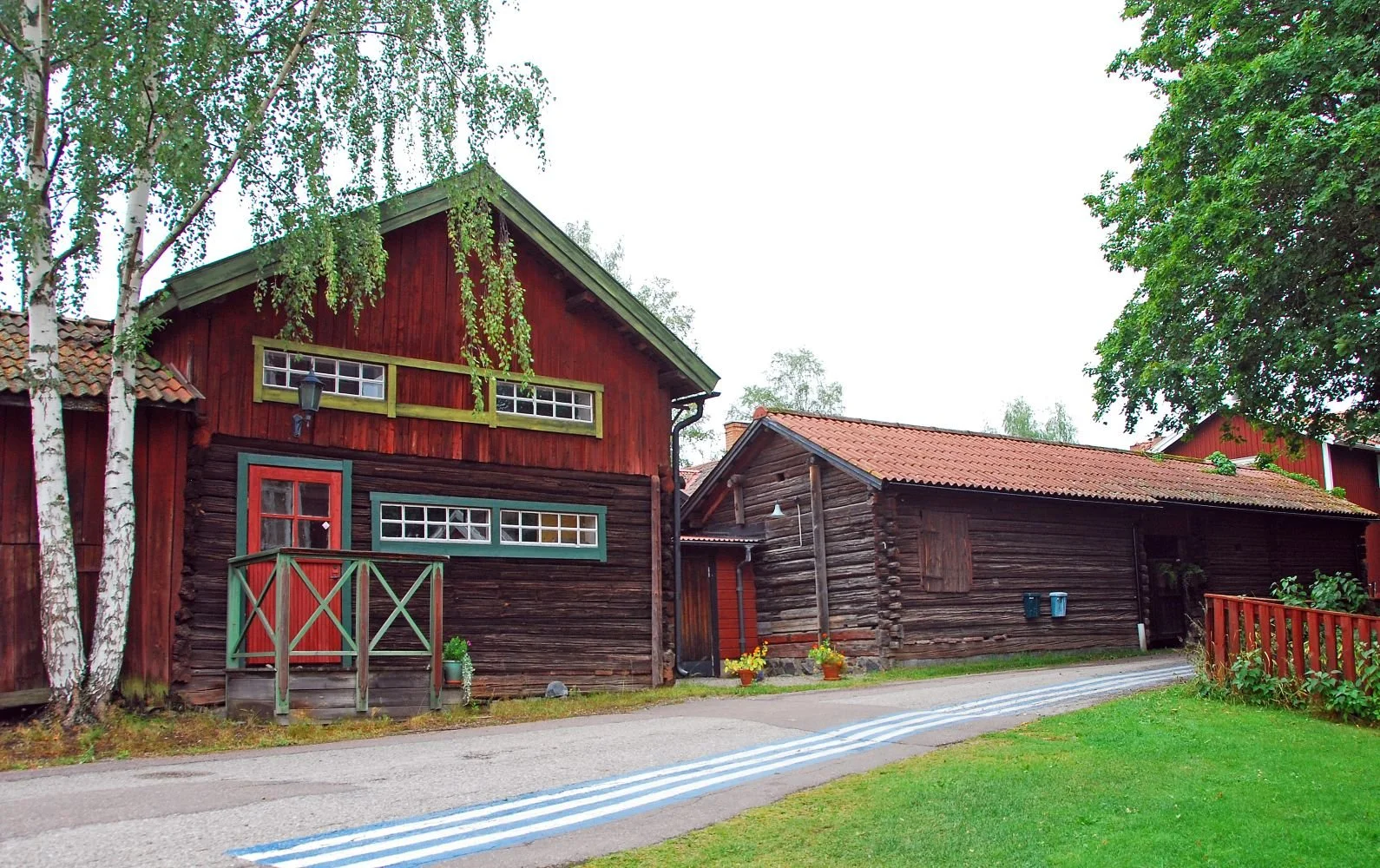
The sourrounding village is lovely and also worth a visit.
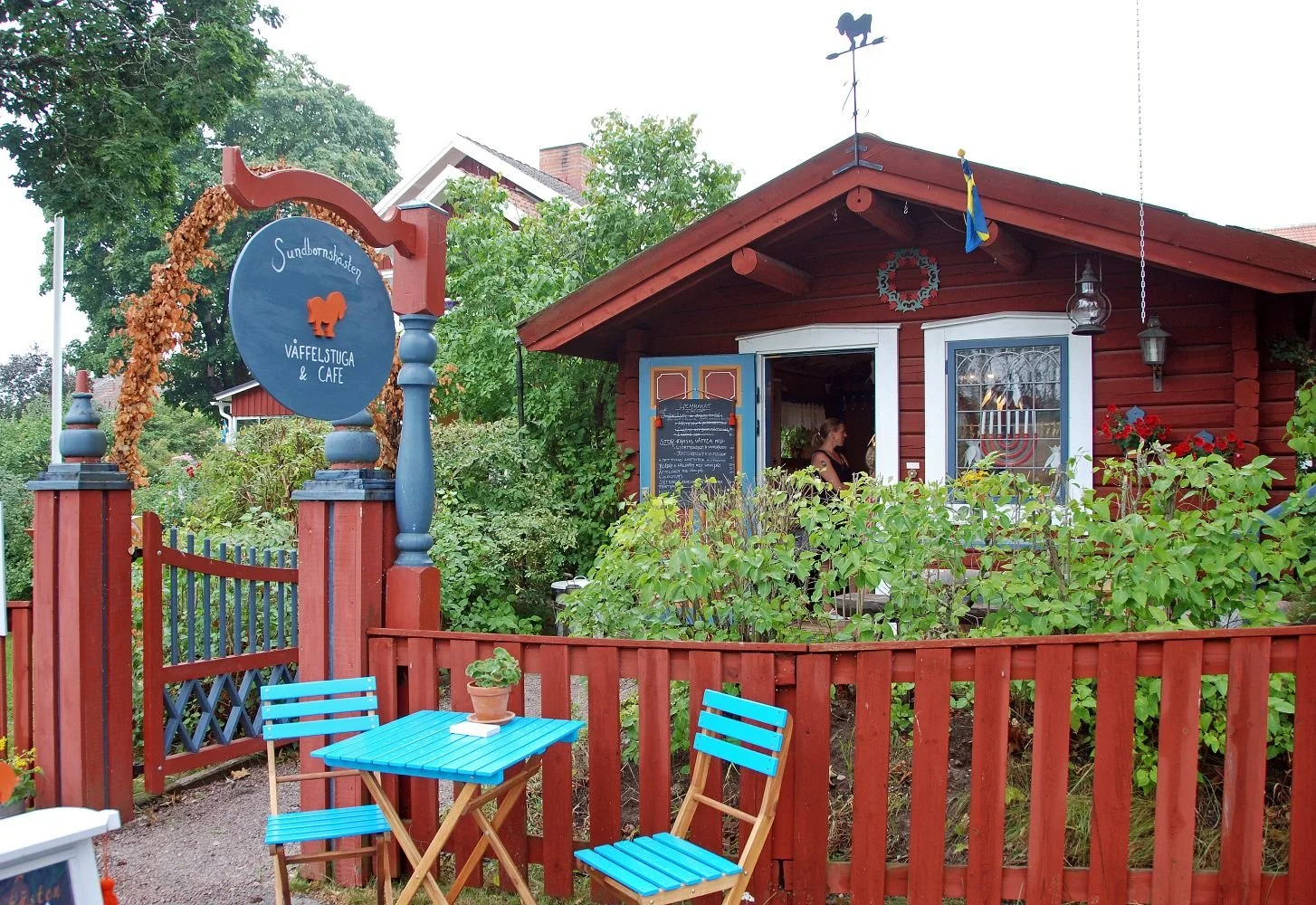
What I carry home
What I take from Karin, once you put the paintings and the coloured rooms aside, is not the idea that she 'had it all'. She didn't, and flattening her into a slogan like that would miss the point. Karin raised eight children. She buried two of them. She ran a household, managed craftsmen, and kept a family and a growing house going, through decades that gave women very little room to manoeuvre. None of that paused for her art. It happened inside all of it, not around it.
That is the part I keep returning to. Her courage was not saved for the easy moments. She made decisions – about colour, about pattern, about what her home and her family's clothes would look like – in the middle of an ordinary, demanding, sometimes grieving life, and she let those decisions stand.
She did not wait for a quieter decade, a room of her own, or anyone's permission.
She chose strong colour where fashion called for heavy and dark. She chose bold pattern where convention called for restraint. She built a personal style the way personal style is actually built - not announced, but repeated, decision after decision, until the choices recognised one another and became unmistakably hers.
That, I think, is the real courage to choose colour. Not boldness for its own sake, but the willingness to commit – to a colour, a shape, a way of living – while others are still holding samples up to better light.
I don't know if I will ever have Karin's confidence. But I would like to borrow a little of it. Enough, at least, to give something its colour, and let the hand stay visible.
If you would like to follow along my story:
Sign up for the studio letter here.

P.S. Unfortunately it was not allowed to take photos in the house but I highly recommend a visit anyways. It is situated in the middle of Sweden in Dalarna close to Falun. More details and images on the official website.